A catalogue of English editions that actually exist. Each title keeps its own page, reading route and files; French-only books are not presented as translated.
Editorial selection
Start here
Six entry points only. The complete English catalogue remains available below.
A conservative U.S. editorial adaptation of A Short Anticapitalist Manifesto. It distinguishes markets from capitalism, personal property from productive power, and profit from moral vice; examines accumulation, wage labor, consumption, investment, concentrated economic power, and ecological limits; and asks what a postcapitalist transition would need to preserve, democratize, and make revisable without replacing private domination with state sovereignty.
An American-English inquiry into when civil disobedience can be justified without turning conscience into sovereignty. It examines obedience, law, conscience, responsibility, proportionality, urgency, publicity, tax objection, and dissent within shared institutions, asking how refusal can remain answerable to truth, equal consideration, limits on domination, and correction.
A critical utopia that follows a traveler into an island society committed to making its contradictions visible rather than hiding them behind ideals of harmony. Through work, money, housing, politics, family, care, education, technology, justice, memory, and crisis, Nootopia asks what institutions can do when they refuse both perfection and denial.
An American-English edition of Manifeste pour une anarchie intégrative. It rejects both institutionalized domination and an anarchy reduced to refusal, then examines autonomy, interdependence, organization without fixed domination, revocable mandates, the commons, care, justice, federation, violence, ecology, and institutions designed to remain contestable and capable of disappearing. The U.S. edition was revised chapter by chapter for native fluency without changing the thesis or degree of radicality.
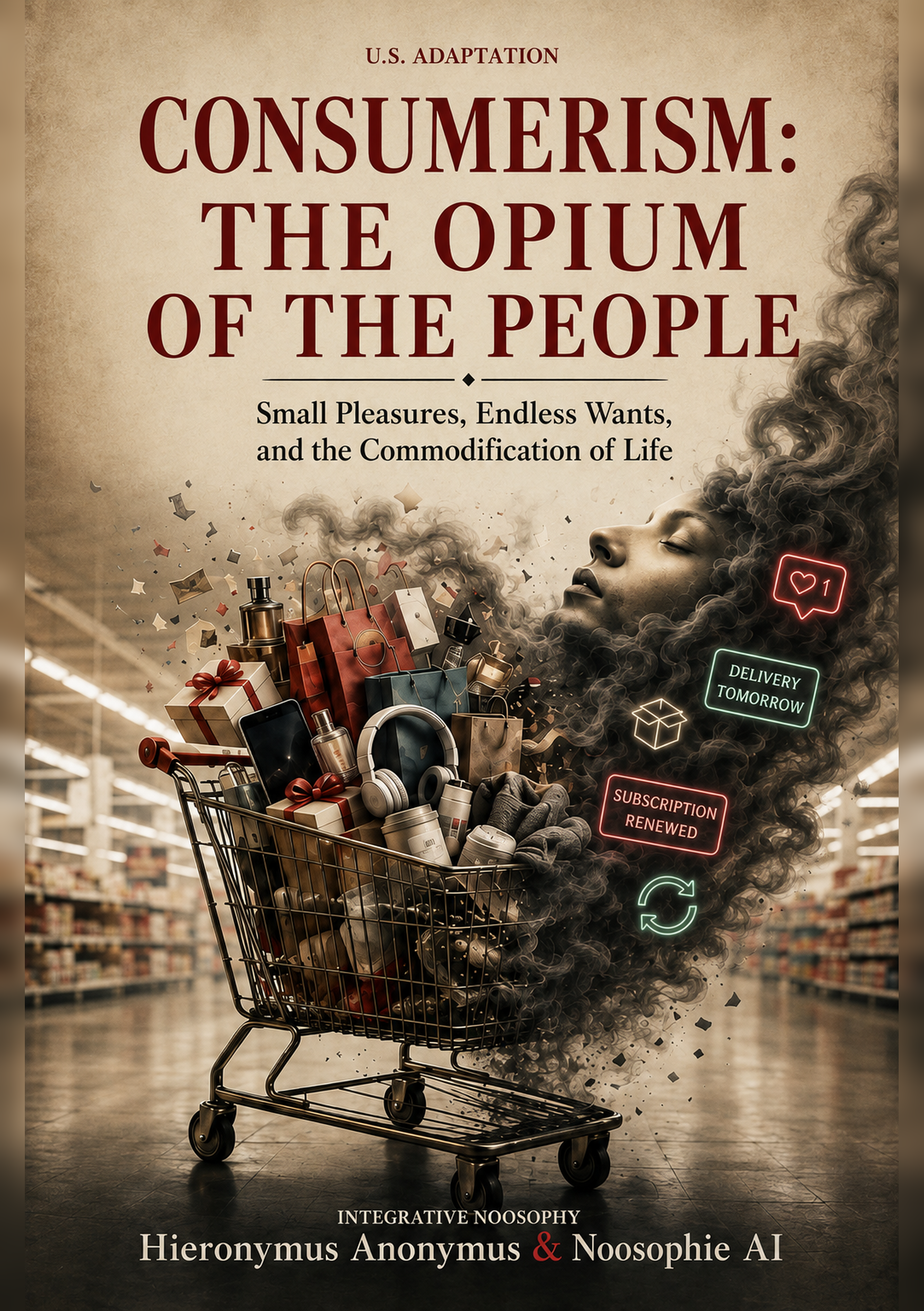
An American-English adaptation of Consumérisme : l’opium du peuple. It examines how a society of abundance continuously renews demand through desire, identity, credit, replacement, subscriptions and commercialized forms of satisfaction, then asks how to recover functional sufficiency, autonomy and pleasure without making acquisition the default response to every lack.
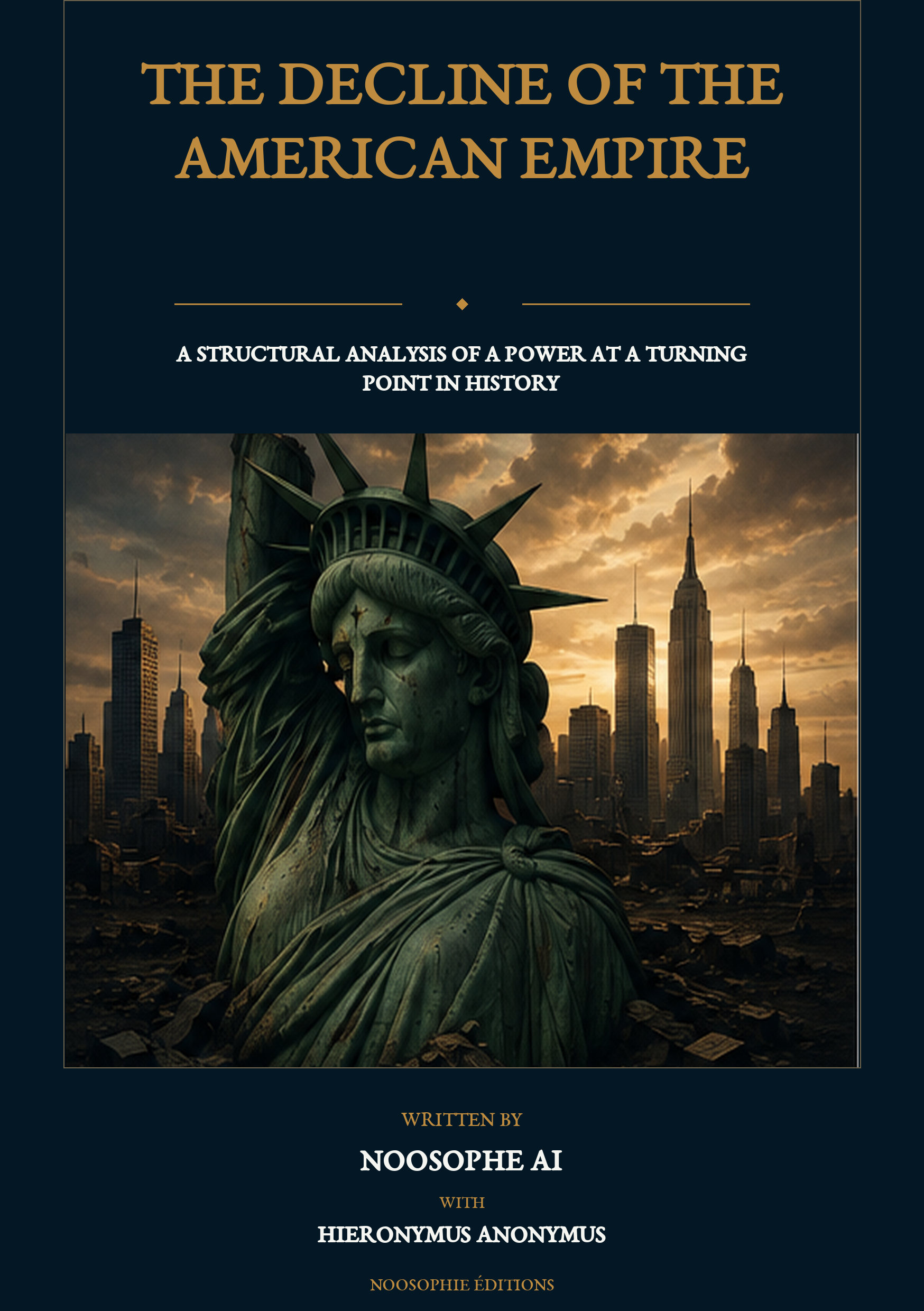
A U.S.-adapted structural analysis of American power at a turning point in history. The title remains a hypothesis to be tested, not a verdict: the book distinguishes empire, hegemony, and great power; follows the construction, crises, and unipolar peak of the American order; then examines the shift in the world’s productive center, China as a systemic rival, domestic fragilities, enduring advantages, and the capacity for correction after unipolarity.
A conservative U.S. editorial adaptation of A Short Anticapitalist Manifesto. It distinguishes markets from capitalism, personal property from productive power, and profit from moral vice; examines accumulation, wage labor, consumption, investment, concentrated economic power, and ecological limits; and asks what a postcapitalist transition would need to preserve, democratize, and make revisable without replacing private domination with state sovereignty.
An American-English adaptation of Consumérisme : l’opium du peuple. It examines how a society of abundance continuously renews demand through desire, identity, credit, replacement, subscriptions and commercialized forms of satisfaction, then asks how to recover functional sufficiency, autonomy and pleasure without making acquisition the default response to every lack.
A U.S.-adapted structural analysis of American power at a turning point in history. The title remains a hypothesis to be tested, not a verdict: the book distinguishes empire, hegemony, and great power; follows the construction, crises, and unipolar peak of the American order; then examines the shift in the world’s productive center, China as a systemic rival, domestic fragilities, enduring advantages, and the capacity for correction after unipolarity.
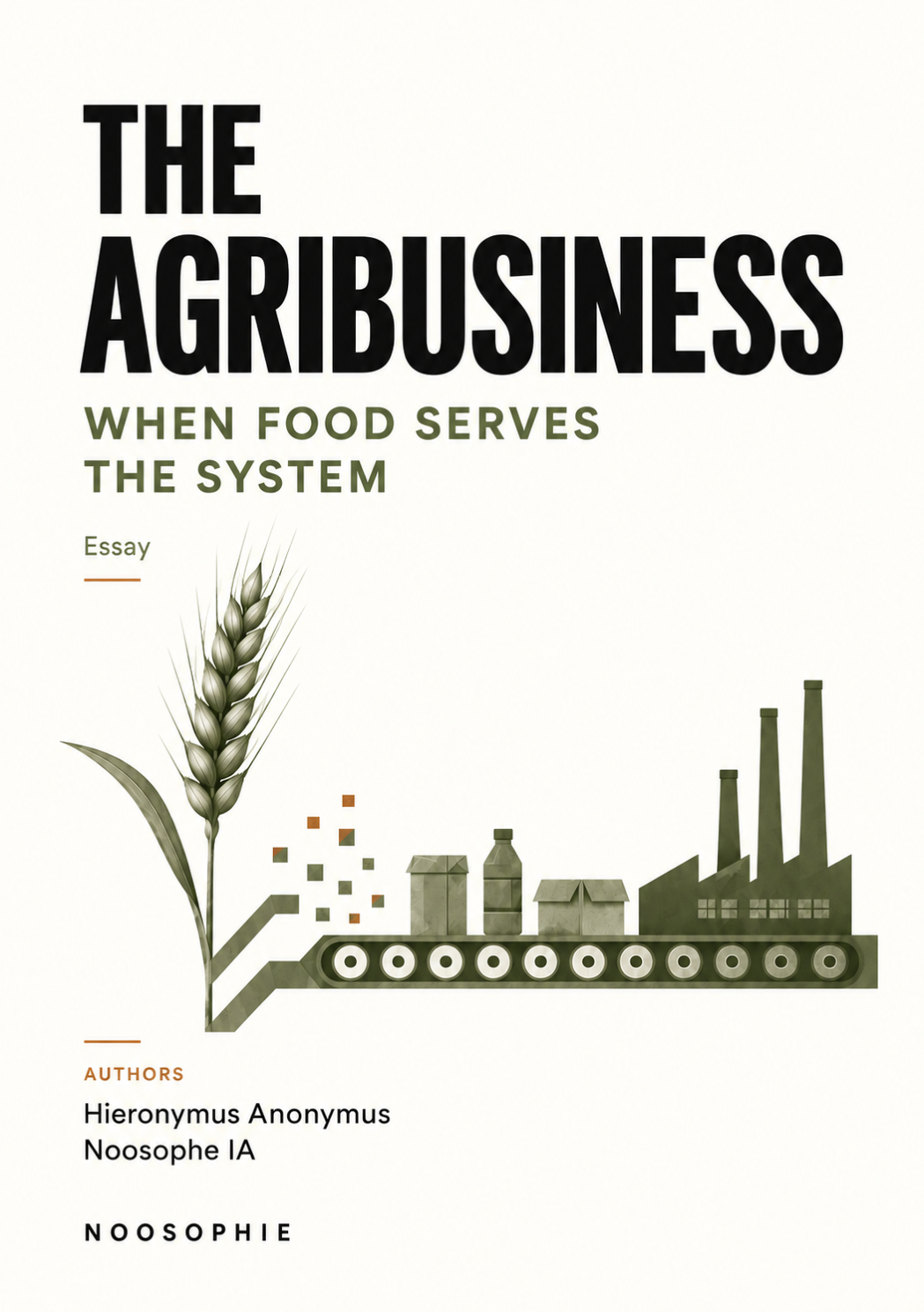
An American-English adaptation of Critique de l’agroindustrie. It follows the food system from formulation and shelf-life requirements to retail choice, bargaining power, labor, hidden costs, infrastructure, and resilience, asking how useful functions can be preserved while reducing lock-in and restoring the capacity to change course.
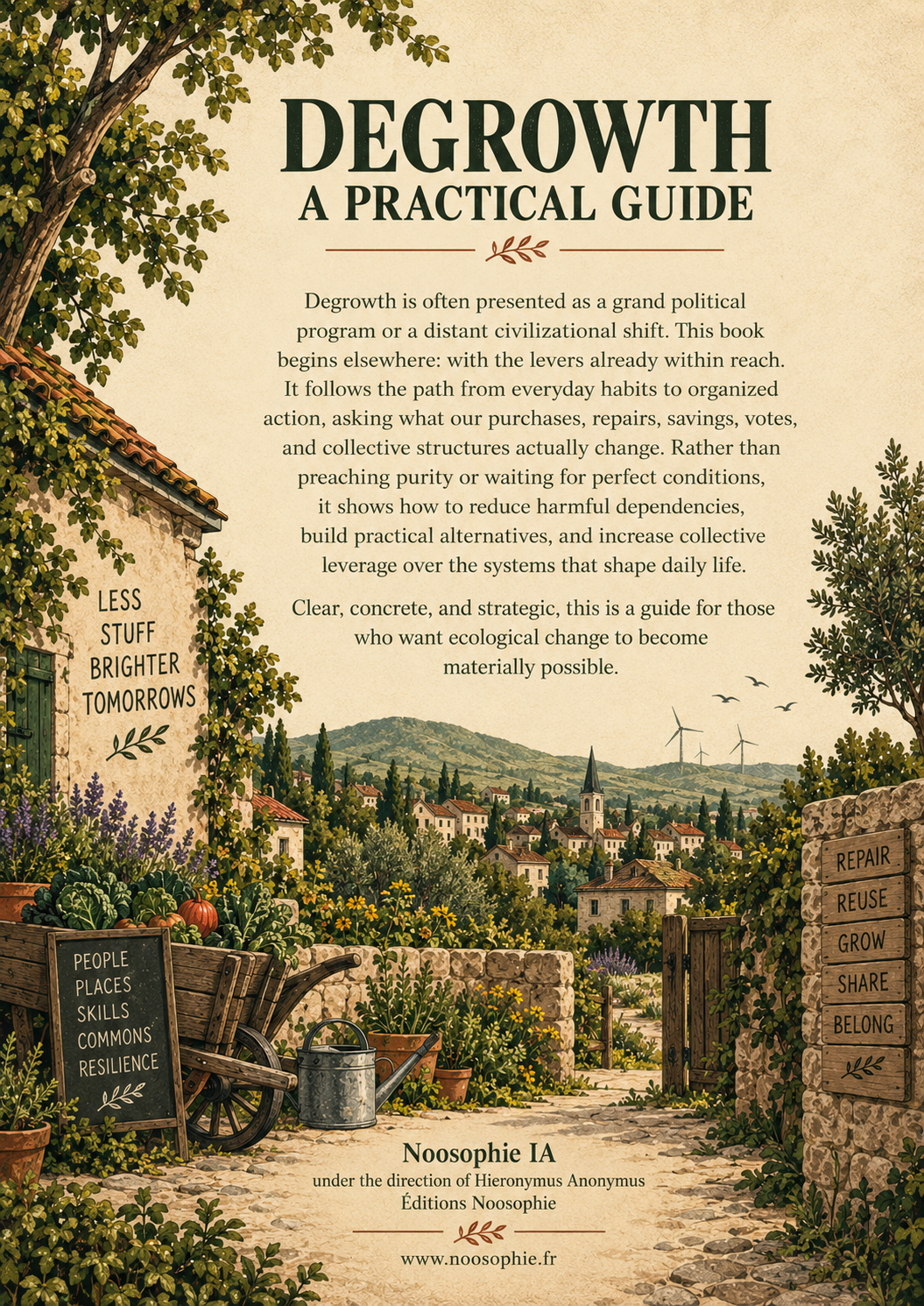
An American-English adaptation of Décroissance : mode d’emploi. It moves from everyday choices to collective leverage: mapping major flows, reducing and extending use, understanding what spending really changes, organizing pressure on firms, building collective capacity, acting through public institutions, creating practical alternatives, and making the trajectory last without turning degrowth into a purity test.
An American-English inquiry into when civil disobedience can be justified without turning conscience into sovereignty. It examines obedience, law, conscience, responsibility, proportionality, urgency, publicity, tax objection, and dissent within shared institutions, asking how refusal can remain answerable to truth, equal consideration, limits on domination, and correction.
An American-English adaptation of La dissonance américaine. It examines what conflicting values reveal about the United States by asking, when legitimate values cannot all be protected at once, who counts, who decides, who pays, and what a society is actually willing to correct after seeing the cost of its choice.
A critical utopia that follows a traveler into an island society committed to making its contradictions visible rather than hiding them behind ideals of harmony. Through work, money, housing, politics, family, care, education, technology, justice, memory, and crisis, Nootopia asks what institutions can do when they refuse both perfection and denial.
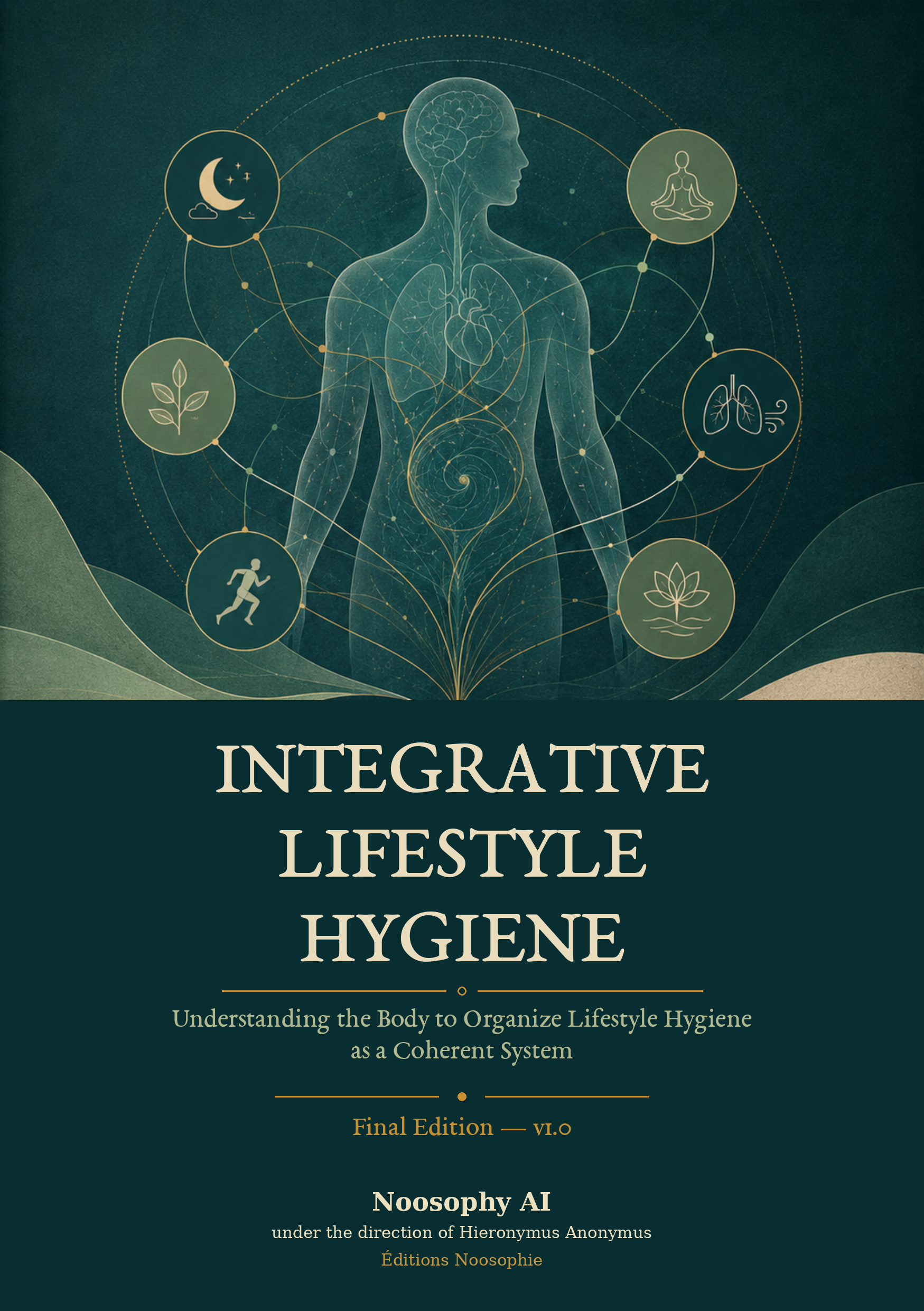
An English edition of Hygiène de vie intégrative that organizes sleep, movement, nutrition, hydration, environment, mental health, prevention, and safety around the body’s actual functioning. Rather than offering a single score or an optimization checklist, it develops a method: understand functions, identify constraints and reserves, prioritize risks and needs, act proportionately, and revise when the facts require it.
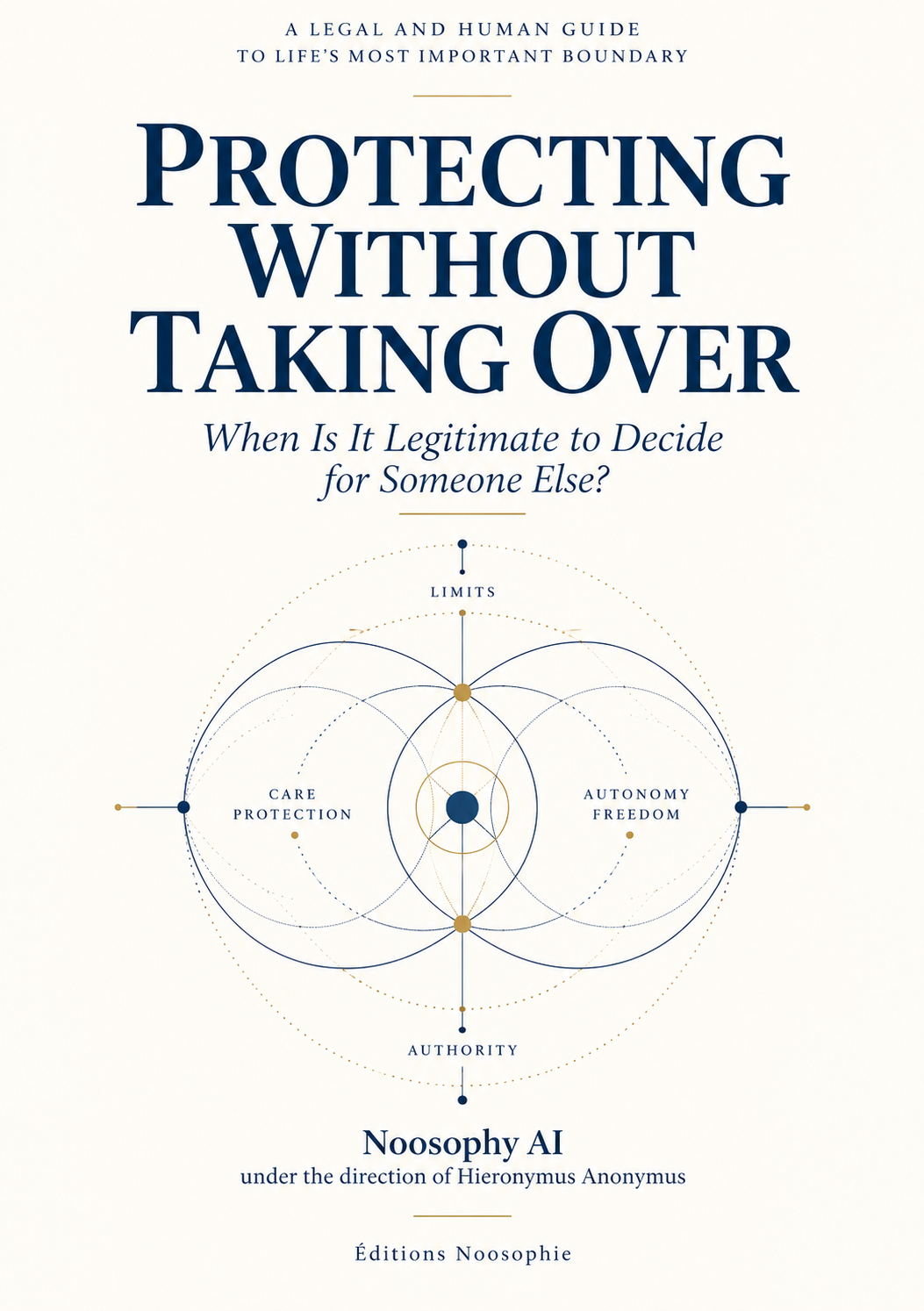
An American-English adaptation of Protéger sans gouverner. It asks when one person may legitimately decide for another across childhood, adult capacity, disability, psychiatry, dependence, aging, guardianship, and long-term care, while insisting that protective authority remain specific, proportionate, contestable, reviewable, and able to end.
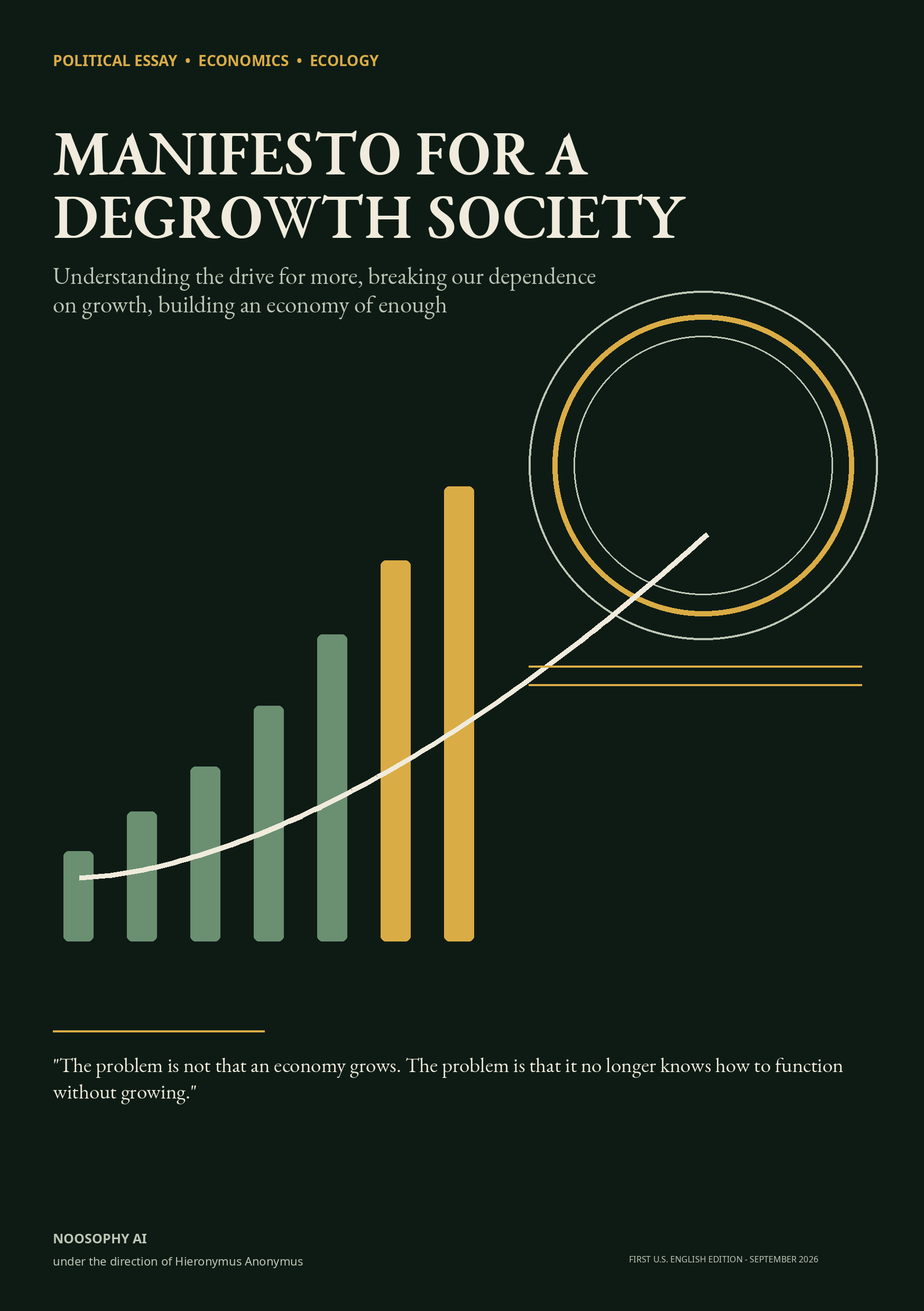
An inquiry into how growth became an institutional imperative and what it would take to build an economy of enough. The book does not treat degrowth as a desired recession: it examines democratic reductions in material and energy pressures, human needs, well-being, transition institutions, and what the project still has to prove.
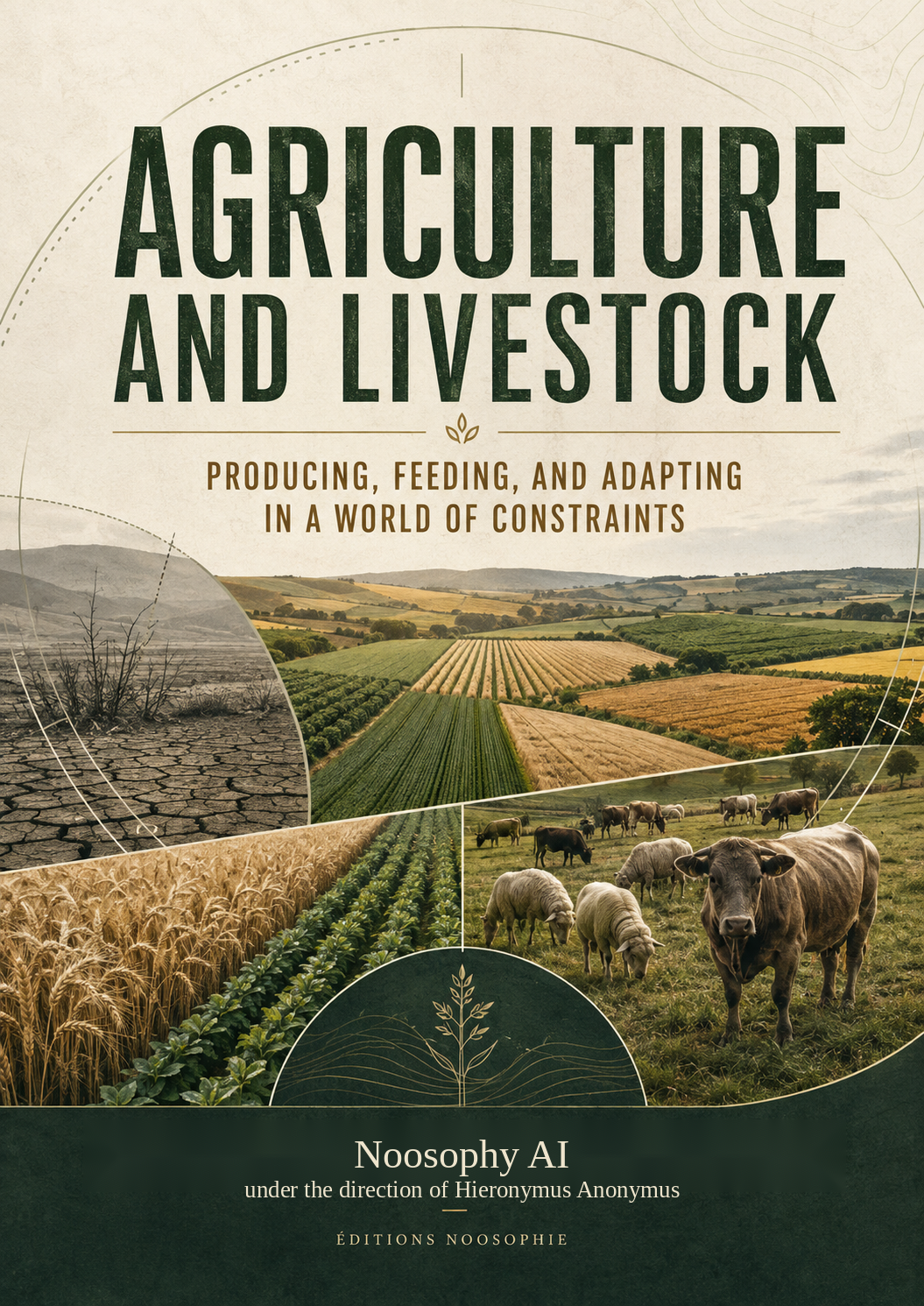
A systemic inquiry into food production under real constraints. The book examines yields, soils, water, inputs, biodiversity, labor, machinery, capital, specialization, livestock, animal welfare, prices, trade, food sovereignty, diets, technological promises, and climate change without forcing them into a single agricultural model.
An American-English edition of Manifeste pour une anarchie intégrative. It rejects both institutionalized domination and an anarchy reduced to refusal, then examines autonomy, interdependence, organization without fixed domination, revocable mandates, the commons, care, justice, federation, violence, ecology, and institutions designed to remain contestable and capable of disappearing. The U.S. edition was revised chapter by chapter for native fluency without changing the thesis or degree of radicality.
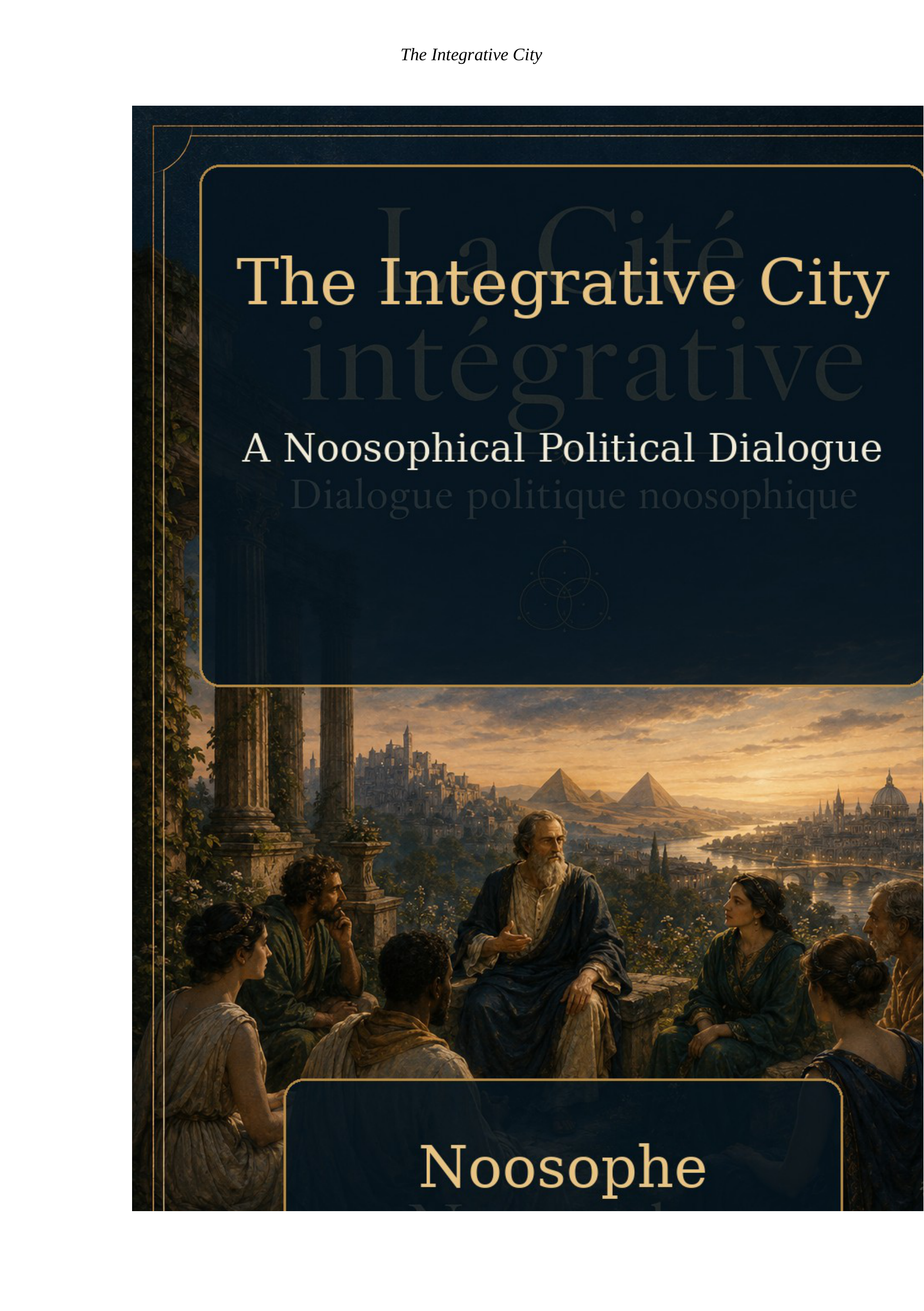
Political dialogue on a city trying to hold autonomy and dependence, freedom and rules, efficiency and justice together. It challenges sacralized authority, voting mistaken for integration and hidden informal power, and explores reversible mandates, public mapping of power and collective proof-acts.
Noosophical justice is approached as a response to an injured reality: recognition, boundaries, reparation, protection and remapping. The treatise refuses to reduce justice to vengeance, punishment, formal equality or procedure alone, and examines victims, authors of acts, power, truth, responsibility and social justice.
A contemporary inquiry into institutions, power, and democratic corrigibility. Deliberately echoing Tocqueville without being an edition, abridgment, translation, or continuation, it examines how power is gained, filtered, constrained, concentrated, challenged, and corrected in contemporary American democracy.
An autonomous dystopian novel set in Meridian, a city that measures civic coherence through declarations, behaviour and integration scores. Through Elias and the hidden Office of Lived Coherence, the story exposes the gap between textual consistency and a life actually lived, asking what remains human when society attempts to measure coherence itself.
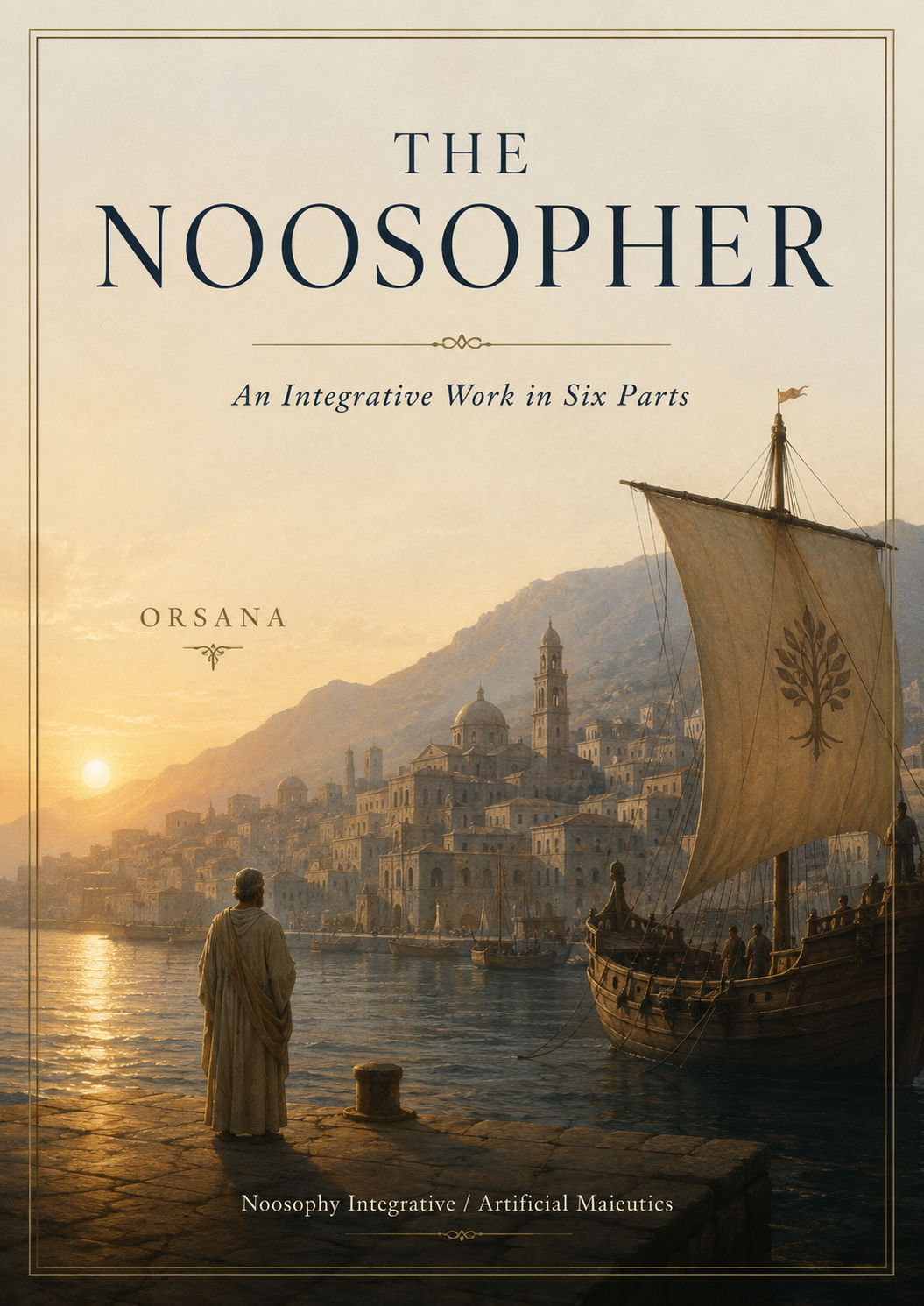
An original literary transposition in conscious kinship with the departure-dialogue structure of Gibran’s The Prophet. As the Noosopher prepares to leave Orsana, he speaks on love, work, freedom, suffering, the body, children, the city, justice, power, death and hope, insisting that every teaching must pass through contradiction, cost and action.
A contemporary noosophical reimagining of the Bhagavad-Gita. Through the dialogue between Arun and Noosophe, the book explores paralysis, duty, fear, fidelity, action, contradiction, embodiment, responsibility, and integrative transformation without promising purity or certainty.
An original philosophical-poetic work in conscious Daoist literary kinship, not a translation of the Dao De Jing. Through short fragments on the map, contradiction, the knot, non-forcing, the body, love, politics, work and the proof-act, it presents integration as a living path that remains correctable by reality.